Most soups are decided before the first ladle goes in. The stock underneath, the way the onion is coaxed in the pot, and when you finally reach for the salt — those three things usually matter more than any fancy garnish. None of them are difficult. They just reward a little patience and a willingness to taste as you go.
Start with a stock that tastes of vegetables, not of scraps
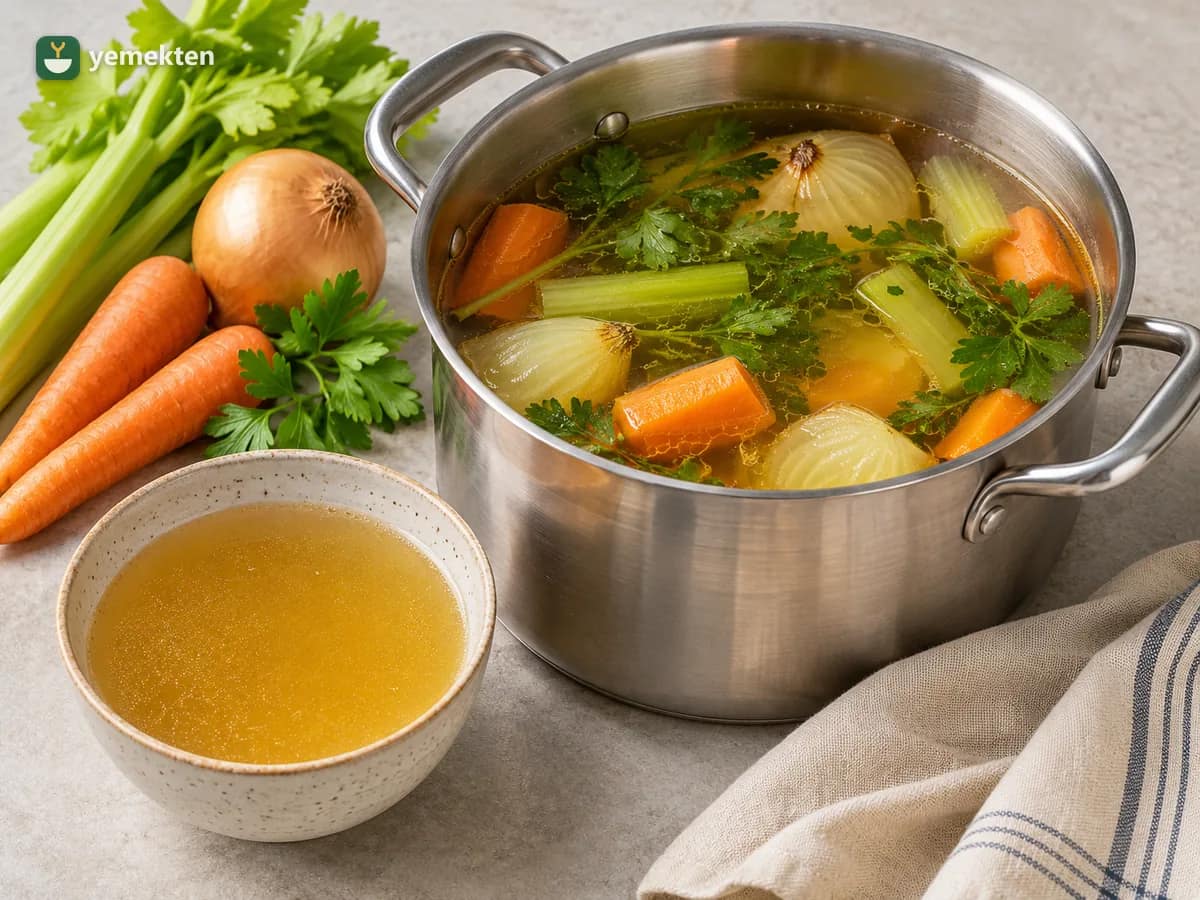
A vegetable stock doesn't need a recipe so much as a rough ratio. For about 2 litres of water, I usually gather 1 large onion, 1 carrot, 1 celery stalk, a handful of mushroom stems if I have them, and a bay leaf. That's it. The point is a clean, savoury backdrop, not a stew in disguise.
Keep the stock light-coloured and gentle. Bring it just to a bare simmer — small bubbles at the edge, not a rolling boil — and hold it there for about 30 to 40 minutes. A hard boil can make everything taste muddled and cloudy, and it pushes volatile aromas straight out of the pot.
- Onion, peeled and roughly chopped
- Carrot, scrubbed and sliced
- Celery, including any pale inner leaves
- Mushroom stems or a dried shiitake
- A bay leaf, a few peppercorns, a sprig of thyme
- Cold water to cover by a few centimetres
Add the vegetables to cold water and bring it up slowly. Starting cold gives the flavours time to move into the liquid. Strain when it's done, pressing gently on the solids but not wringing them out, and taste it on its own. If it's thin, simmer it down a little to concentrate; if it's harsh, dilute it. Either is fine.
Sweat the onion — don't rush it
Fat and heat do something to onions that water never will. Over about 8 to 10 minutes on a moderate flame, with a pinch of salt and a little oil or butter, the onion goes from sharp and raw to sweet and soft. You're not browning it, just softening the edges and letting the sweetness come forward.
The salt here isn't for seasoning the soup yet — it's there to draw moisture out so the onion softens rather than scorches. Keep the heat moderate; if the onion starts to colour before it's tender, turn it down and add a splash of water. That splash also lifts the sticky brown bits from the pan, which is flavour you don't want to lose.
Season at the end, then taste again
Salt early in a stock and you're guessing, because the liquid will reduce. Salt at the end of the soup and you're tasting the thing you're actually going to eat. Add salt in small pinches, stir, wait a moment, then taste. Your palate adjusts as you go, so a soup that tasted right two pinches ago can quietly tip over.
- Taste the soup before you season anything.
- Add salt in small pinches, stirring between each.
- Let it simmer a minute, then taste again.
- Finish with a squeeze of lemon or a splash of vinegar if it still feels dull.
- Adjust the texture last — thin with stock, thicken with a little mashed potato or bread.
A good soup base is mostly restraint. A clean stock, an onion given its ten minutes, and salt added when you can actually taste what you're seasoning. Everything else is a variation on that theme, and a very pleasant one to practise.