Boiling pasta looks simple, and that is exactly why it is easy to do badly. The pasta turns out limp, the sauce slides off, and the pot is either a salty swamp or a bland bath. The good news is that better pasta needs no special equipment, only a few habits. Here is how I handle it at home, with the useful details and the small decisions that actually matter.
Start with enough water
Pasta needs room to move so the pieces do not glue together. For about 250 g of dried pasta, I usually bring 2 to 3 litres of water to a rolling boil in a wide pot. More pasta means more water: for 500 g, use about 4 to 5 litres. A wide pot helps the water return to a boil quickly after the pasta goes in. Put the lid on while heating, then take it off once the pasta is added, or leave it slightly ajar so the pot does not boil over.
Salt with intention
Salt the water once it is boiling, just before the pasta goes in. I aim for roughly 10 g of salt per litre of water, which is about a heaped teaspoon of fine sea salt. That sounds like a lot, but most of it stays in the pot. Taste the water: it should be pleasantly seasoned, like a light soup, not aggressively salty. If you are using a hard, aged cheese in the sauce, you can ease off slightly.
Time it, but trust your teeth
Use the time on the packet as a starting point, not a command. Start checking about 2 minutes before the stated time. Dried pasta is usually ready when it is tender but still has a slight firmness at the centre. Fresh pasta can take only a few minutes, so stay close. Stir in the first minute or two so the pieces separate, then stir occasionally.
Save the pasta water before you drain
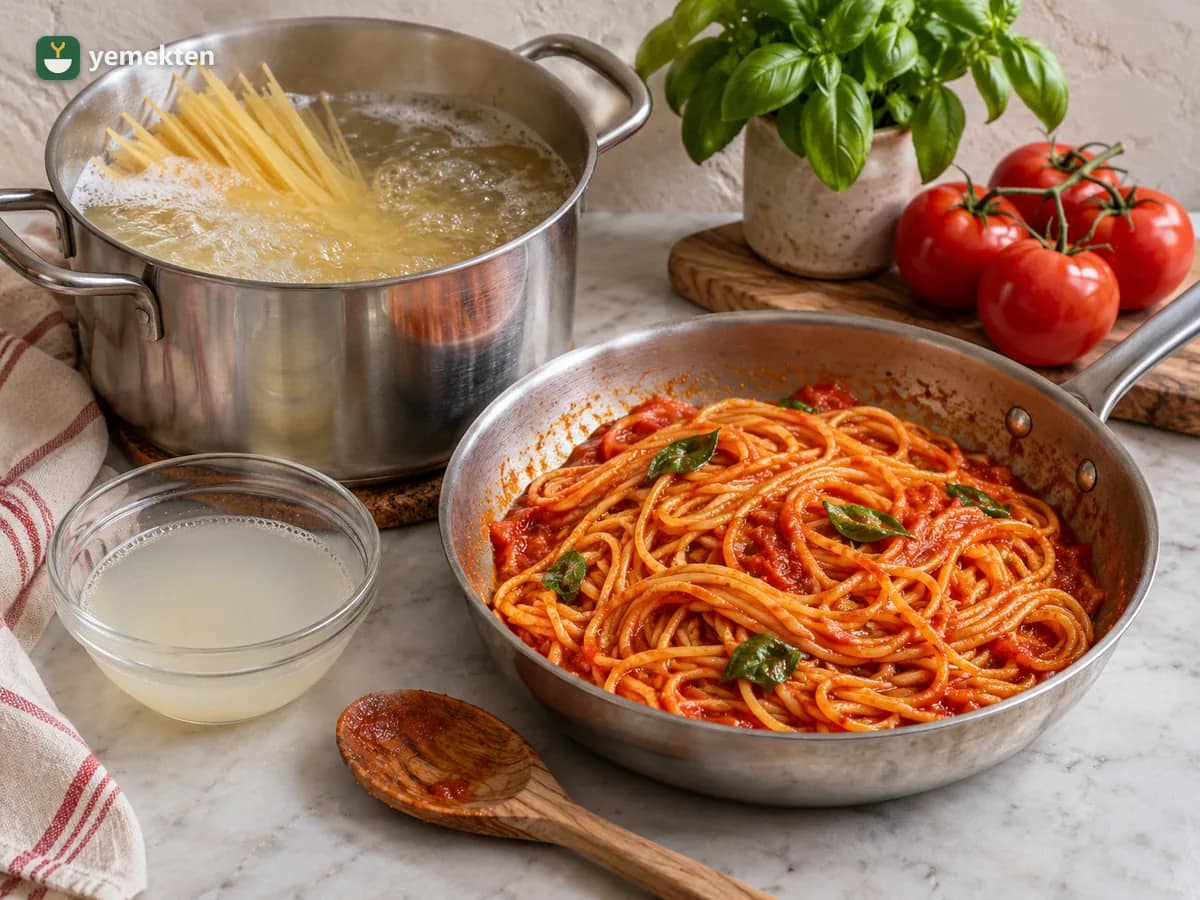
Before draining, scoop out a mug of the cooking water. This starchy, lightly salted liquid is the quiet hero of the dish. It helps a sauce come together, thickens it without cream or flour, and helps the sauce coat every piece of pasta. If you forget to save it, you can loosen the sauce with a splash of hot tap water, but the pasta water is better.
Finish the pasta in the sauce
Drain the pasta but do not rinse it. Shake off most of the water, then tip the pasta into the pan with the sauce, which should be warm and waiting. Add a splash of the reserved pasta water, toss over medium heat for about 1 to 2 minutes, and let the sauce thicken and cling. Add more water a little at a time if it looks tight or dry. Finish off the heat, then taste and adjust the salt.
- Use 2 to 3 litres of water for about 250 g of pasta, and a wide pot.
- Salt at roughly 10 g per litre, added once the water boils.
- Start tasting about 2 minutes before the packet time.
- Scoop out a mug of pasta water before draining.
- Do not rinse the pasta; finish it in the warm sauce with a splash of pasta water.
Small habits, better bowls
The difference between ordinary pasta and genuinely good pasta is mostly attention. Season the water properly, keep the sauce warm, and let the pasta and sauce meet in the pan for the last minute. If you are cooking a large batch, cook it in two pots or in batches so the water does not drop too far in temperature. And when you drain, keep a little pasta water back even if you think you will not need it; it is easier to add than to replace.
- Bring plenty of water to a rolling boil.
- Add salt and taste the water.
- Add the pasta and stir well.
- Taste early and drain when just tender.
- Reserve pasta water, then finish in the pan.