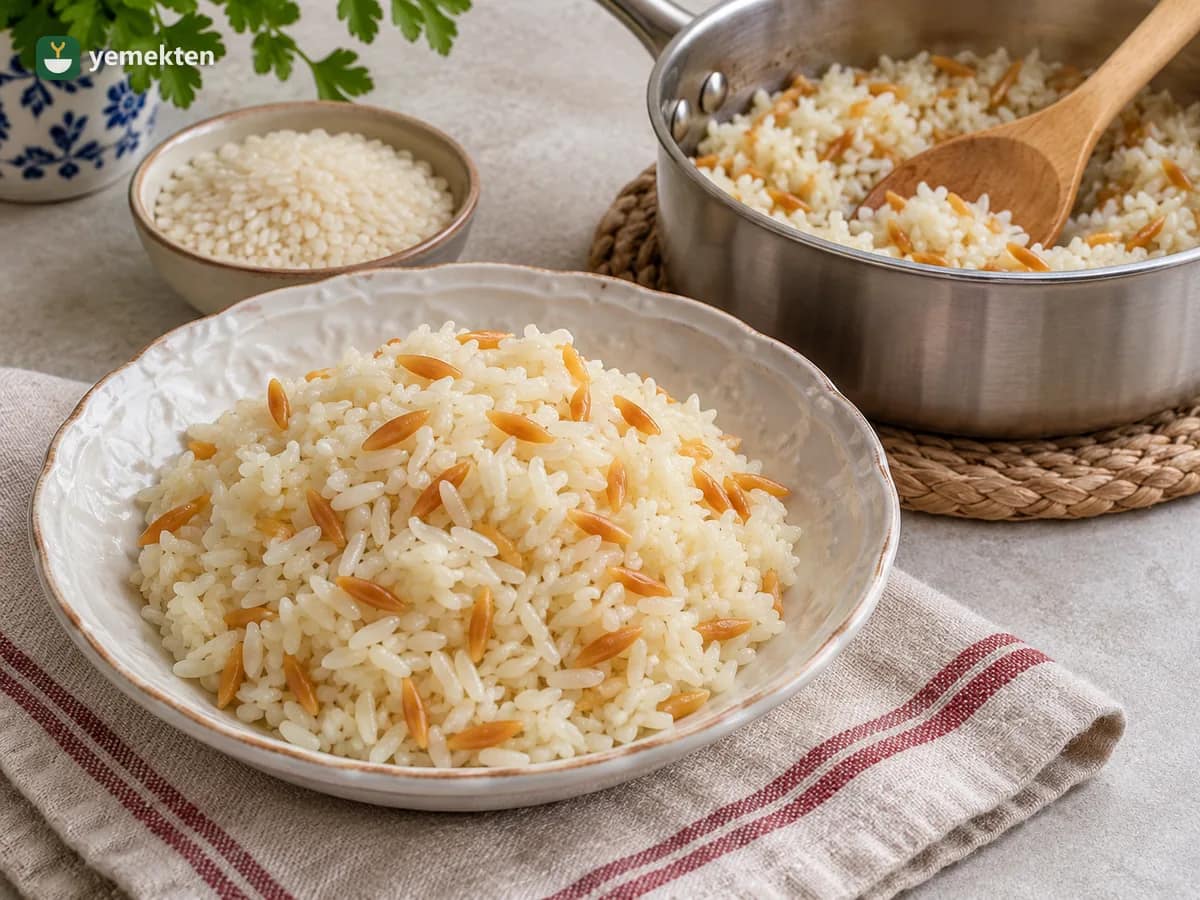
Pilaf should be loose enough that a fork slides through it, each grain separate and lightly coated with fat, not clumped into something you could slice. When it goes wrong, the usual culprit isn't the rice itself but a handful of small decisions: how much you rinse it, whether you soak it, how much water goes in, and what happens after the lid goes on. Here is how I handle each one at home, with the reasoning behind it.
Start by washing (and sometimes soaking)
Rinsing removes loose surface starch, and that starch is what glues grains together when it gelatinises. Put the rice in a bowl, cover with cool water, swirl with your fingers until the water turns cloudy, then drain. Repeat about three or four times, until the water is only slightly milky. For long-grain rice this is usually enough. Soaking is optional: about 20–30 minutes in cool water can help longer grains cook more evenly and stay a little firmer, but it also means the rice has already absorbed water, so you need less in the pot. If I soak, I drain very well and reduce the liquid by roughly 10–15 percent.
Toast the grains in fat
This is the step that separates pilaf from plain boiled rice. Warm about 1–2 tablespoons of butter or oil per 200 g of dry rice in a wide pan, add the drained rice and stir over medium heat for about 2–3 minutes, until the grains look chalky at the edges and smell faintly nutty. Toasting coats each grain in fat, which slows starch release and helps keep them apart. Don't let them brown unless you want that flavour; the goal is a light, even coat.
The water ratio: start lower than you think
For long-grain rice, a common starting point is about 1.5 parts water to 1 part rice by volume, or roughly 1.4–1.5 if you soaked and drained well. Short-grain and risotto-style rice usually want more, about 1.8–2 parts. These are starting points, not laws: your pan, lid and heat source all matter. Add hot liquid (stock or water) to the toasted rice, season now, bring to a gentle simmer, then cover and turn the heat low. Resist stirring after the liquid goes in — stirring rubs grains together and releases more starch.
Resting is not optional
When the liquid is absorbed and small steam holes appear on the surface, take the pan off the heat and let it sit covered for about 10 minutes. During this rest, moisture redistributes from the centre of each grain outward and the structure firms up. Then fluff gently with a fork, not a spoon, lifting from the bottom. If you serve immediately off the heat, the rice is often still wet and will pack together.
Why pilaf turns sticky
- Too much water: the excess keeps starch gelatinising and grains swell into each other.
- Insufficient rinsing: surface starch acts like glue once heated.
- Stirring during cooking: friction breaks grains and releases starch.
- A tight, cold pan or too-high heat: uneven cooking means some grains burst before others finish.
- Skipping the rest: grains haven't firmed up yet and mash together when fluffed.
- Old rice or broken grains: more surface area, more starch, more clumping.
Rescue and prevention
If the rice is already sticky, spread it on a wide tray for a few minutes to let steam escape, then fluff with a fork; a little melted butter helps loosen clumps. For next time, measure water by volume and keep notes on your own pan, since the same ratio can behave differently on a gas hob versus an induction plate. And taste a grain near the end rather than trusting the timer alone — about 15–18 minutes for long-grain is typical, but your kitchen will tell you more than any chart.
None of this is complicated, but each step leans on the next: rinse well, toast briefly, use a modest amount of hot liquid, keep the lid on, and let it rest. Do that and pilaf stops being a gamble.