Good sushi at home rarely fails because of the fish. More often it is the rice: too wet, too dry, under-seasoned, or mashed into a sticky lump. The good news is that rice is forgiving once you understand the few points where it actually matters. You do not need a wooden hangiri or a restaurant rice cooker, though both help. You need the right grain, a careful wash, a light hand with vinegar, and patience while it cools.
Start with the right rice
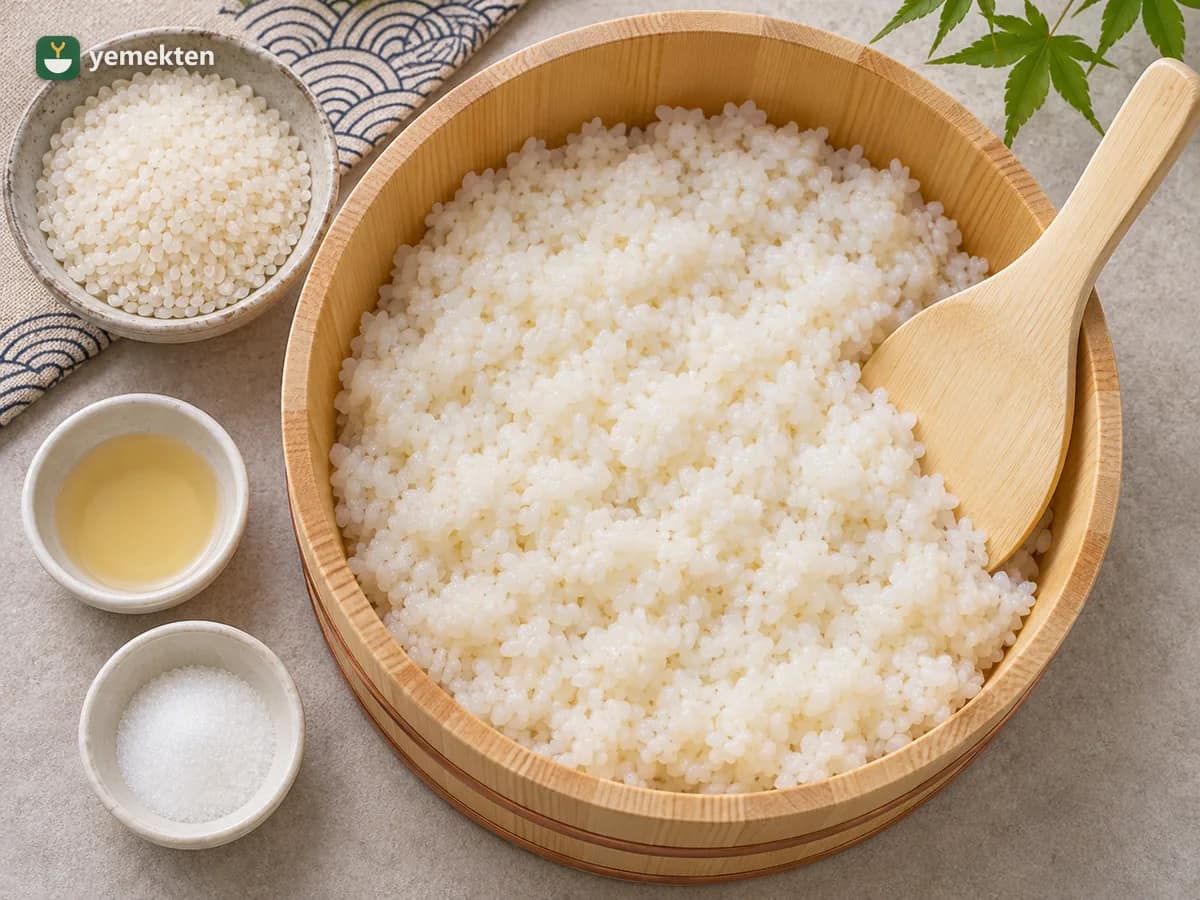
Use short-grain japonica rice sold as sushi rice, often labelled koshihikari or calrose. These grains are plump and cling together without turning to paste. Long-grain rice will stay separate and taste wrong here; pudding or glutinous rice is far too sticky. If you cannot find a bag labelled for sushi, a plain short-grain rice is usually the next best thing. Buy from a shop with decent turnover, and store the bag sealed in a cool cupboard.
Wash until the water clears
Put the rice in a wide bowl, cover with cool water, and swirl gently with your fingers. The water will turn milky almost at once. Pour it off, add fresh water, and repeat. Do not scrub hard and do not let the grains sit in cloudy water, or they will crack and turn mushy. Most rice takes about four to six changes of water before it runs nearly clear, which is usually enough. Then drain it in a sieve for about ten minutes so the outside dries a little.
Cook by absorption, then rest
A simple ratio is one part rice to about 1.1 to 1.2 parts water by volume, depending on your cooker and how fresh the rice is. Rinse the rice, drain, then cook covered on a low simmer until the water is gone, usually about twelve to fifteen minutes after it comes to a gentle boil. Turn off the heat and leave it covered for another ten minutes. Do not stir while it cooks; you want the grains intact.
Mix the vinegar seasoning
For roughly 300 g of raw rice, which makes about three to four generous servings, warm about 45 ml rice vinegar with 20 g sugar and 5 g fine salt until both dissolve. Let it cool slightly. Some cooks add a small piece of kombu to the warm vinegar for a few minutes for a savoury note; that is optional. Taste the seasoning on its own: it should be sharp and a little sweet, because it will be diluted by a lot of rice.
Fold, do not stir
Tip the hot rice into a wide, shallow bowl or tray, spread it lightly, and sprinkle the vinegar over in two or three additions. Use a spatula or rice paddle to cut and fold the rice, turning it over gently rather than stirring in circles. This distributes the seasoning without crushing the grains. Work quickly while the rice is warm, because warm grains absorb the vinegar more evenly than cold ones.
- Spread the hot rice in a shallow layer.
- Sprinkle a third of the vinegar over the surface.
- Cut and fold with a paddle, lifting from the bottom.
- Repeat twice more until the vinegar is used up.
- Taste a grain; adjust with a little more seasoning if needed.
Cool it the right way
Cool the rice at room temperature, spread out, for about fifteen to twenty minutes, fanning it gently if you like. Aim for a temperature that feels barely warm or cool to the touch, roughly body temperature or a little below. Do not put hot rice straight into the fridge, where it firms unevenly and loses its shine. Cover it with a damp cloth once cooled so it does not dry out, and use it within a couple of hours. Refrigerated leftover sushi rice is best reheated gently, though it will never be quite as good as fresh.
Once you have made this a few times, the proportions become instinctive: wash, drain, cook, rest, season while warm, cool while fanning. That small routine is the difference between rice that merely holds a roll together and rice you would happily eat on its own.