An egg looks like one ingredient, but in the kitchen it does different jobs. It holds a patty together, lifts a cake and makes a pastry glossy. When you look for a replacement, start by asking what the egg does in that recipe.
The same swap does not give the same result everywhere. Change the flour, sugar, liquid or baking time and the balance shifts. Try a new substitute in a small batch before committing a whole tray.
Work out the egg's job first
In a meatball mix the egg binds. In a cake it adds moisture and holds the structure. On top of a pastry it only leaves a shiny surface. Each job needs a different stand-in; asking 'what is the egg doing here' makes the right choice easier.
Binding in patties, fritters and fillings
In minced meat mixes, vegetable fritters and chickpea patties, the egg holds the mixture together. Ingredients with starch and fibre tend to work well here.
- Mashed boiled potato: stir it into the mix, it binds and softens.
- Chia or ground flax soaked in water: the gel that forms around the seeds pulls the mixture together.
- Fine breadcrumbs or oats: they absorb liquid and firm up the mix.
- A few spoonfuls of cooked rice or bulgur: useful in vegetable patties in particular.
All of these dry the mixture out a little. If it crumbles, add one more spoon of breadcrumbs or a tablespoon of yogurt and let it rest a few minutes. If it turns too firm, add a little water or some grated vegetables.
Moisture and lift in cakes and cookies
In a cake the egg works as liquid, as fat and as help with rising. Whatever replaces it has to carry some of that load. Yogurt brings moisture and a mild acidity that supports the rise; banana or apple puree brings moisture and flavour.
- Yogurt: about 3 tablespoons in place of one egg.
- Ripe banana, mashed: about 3 tablespoons per egg, for a sweet, moist crumb.
- Applesauce: a similar amount, for a softer cake.
- A pinch of extra baking powder: supports the rise once the liquid goes up.
These swaps leave a mark on flavour and texture. A banana cake comes out a little heavier, a yogurt cake a little moister. In cookies the puree softens the dough, so if shaping becomes awkward, rest the dough in the fridge for a few minutes.
Glazing the top of a pastry
The egg brushed over a borek, a bun or a sweet roll is mostly there for looks, and another liquid can take its place.
- Milk: gives a light brown, soft surface in the oven.
- Oil: adds shine without changing the colour much.
- Lightly sweetened water: leaves a thin gloss on sweet pastries.
None of these browns as deeply as egg. If you want stronger colour, switch on the top element for the last few minutes, but stay close so it does not burn.
No real match for menemen or omelettes
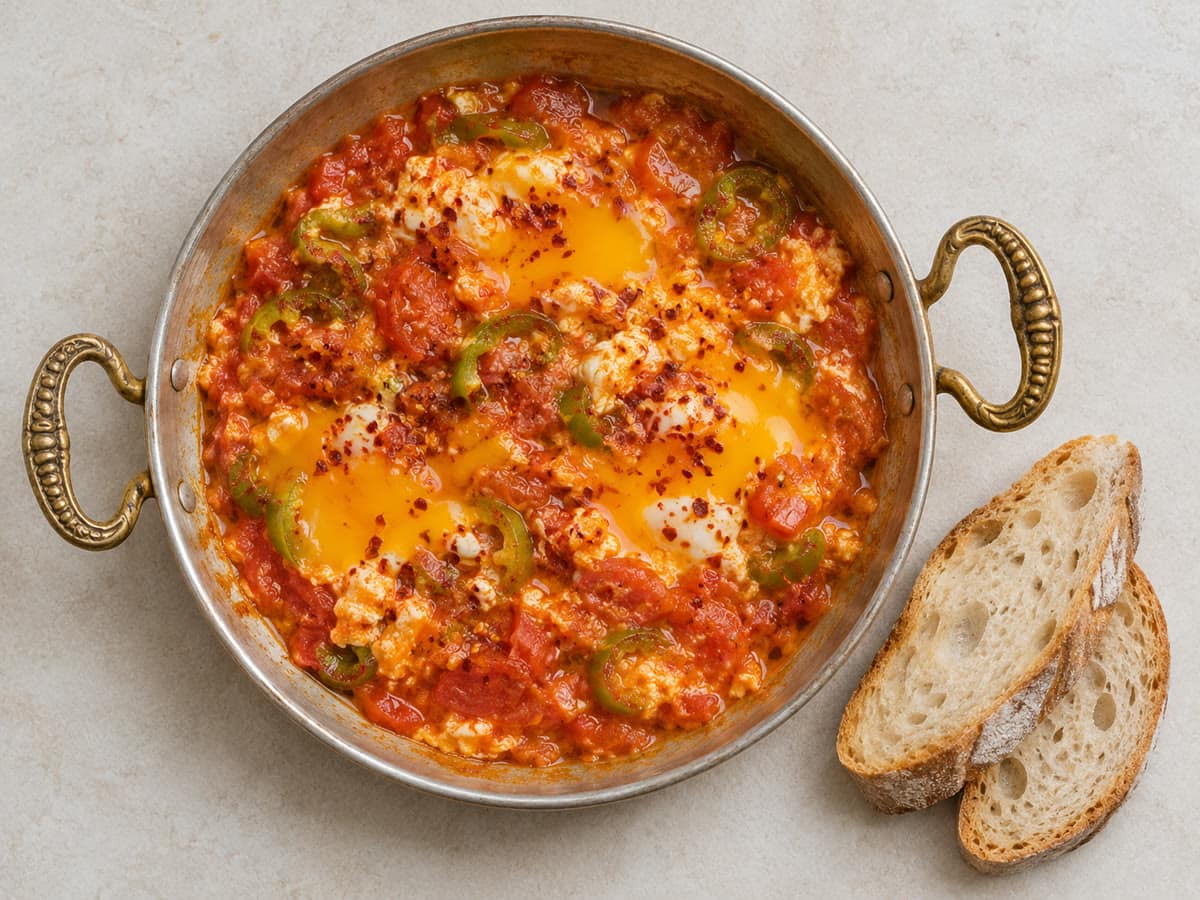
In some dishes the egg is not an ingredient but the dish itself. Menemen, omelettes, fried eggs and soft-boiled eggs have no true one-for-one replacement. Mixtures of chickpea flour and water hold together in a pan, but the taste and texture are something else entirely. If you want these dishes without eggs, treat them as separate recipes rather than swaps.
If there is an allergy, read the label
If you are cooking for someone with an egg allergy, read the full ingredient list. Ready-made sauces, breadcrumbs, some pasta and packaged pastries can contain egg, and a product that looks egg-free may list egg white, albumin or egg lecithin on the label. In homemade swaps, counters, bowls and spoons that have touched egg can also be a problem. A doctor or dietitian decides how serious the allergy is and what is safe. This is general information and does not replace medical advice.